
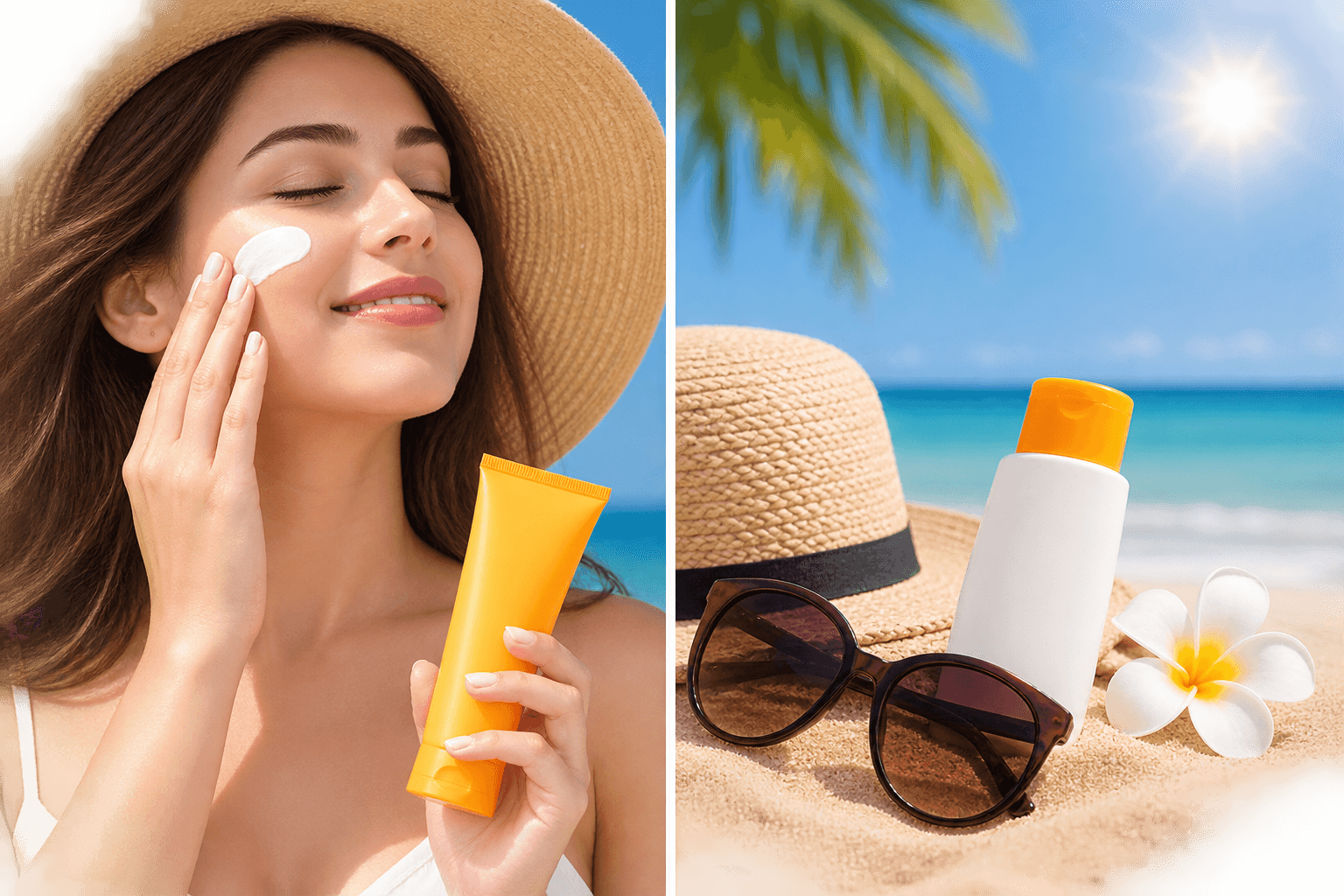
We often think of sunscreen as something we need only when going to the beach or spending a long day outside. In reality, our skin is exposed to UV rays almost every day, and repeated exposure can slowly show up as tanning, dark spots, uneven skin tone, fine lines and premature ageing. A good sunscreen works like a protective layer, helping reduce the damage caused by UVA and UVB rays. Dermatologists generally recommend choosing a broad-spectrum, water-resistant sunscreen with SPF 30 or higher.
Cause & Effect
- UV exposure → sunburn, redness and skin irritation.
- Repeated sun exposure → tanning, pigmentation and dark spots.
- Long-term UV exposure → premature ageing, wrinkles and loss of skin elasticity.
- Unprotected exposure over many years → increased risk of skin cancer.
- Regular sunscreen use → better protection against sun damage and premature ageing.
How to Use Sunscreen Properly
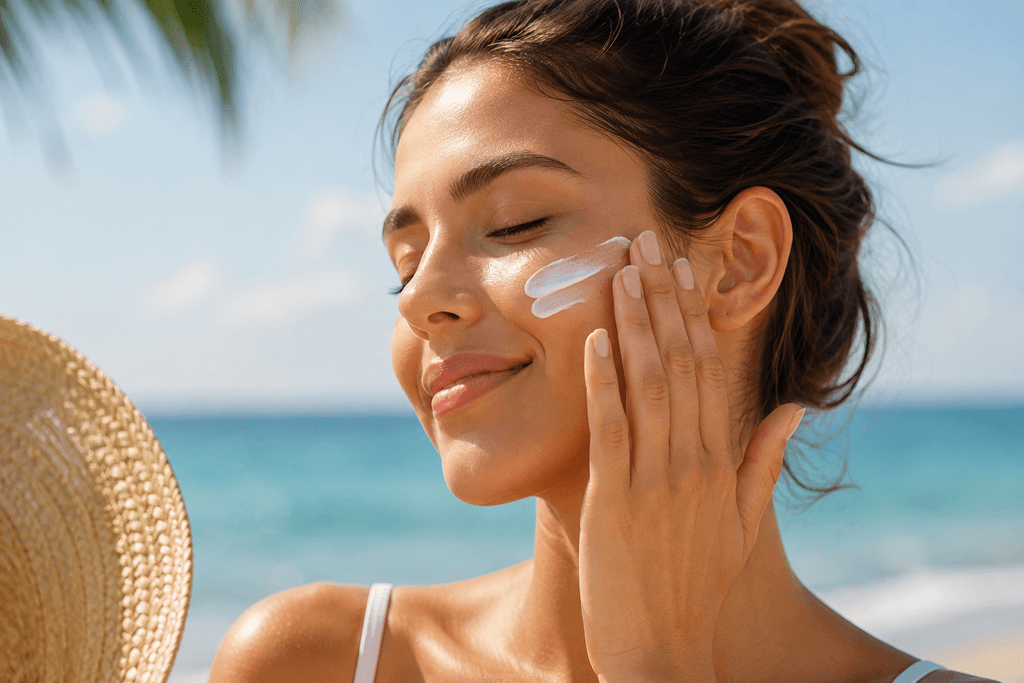
Using sunscreen is simple, but the way you apply it matters. Put it on about 15 minutes before going outside and cover all exposed areas, including places we often forget such as the ears, neck, hands and the back of the neck. If you’re outdoors, sweating or swimming, sunscreen needs to be reapplied because it gradually wears away.
Simple Tips
- Choose SPF 30 or higher with broad-spectrum UVA + UVB protection.
- Apply a generous, even layer rather than using just a tiny amount.
- Reapply at least every 2 hours when outdoors.
- Reapply sooner after swimming, heavy sweating or towel drying, following the product’s water-resistance instructions.
- Don’t forget your ears, neck, hands, lips and exposed scalp.
- Sunscreen works best when combined with sunglasses, protective clothing and shade.
What Happens After Regular Sunscreen Use?
Don’t expect overnight changes. The biggest benefit of sunscreen is actually what doesn’t happen — less repeated UV damage. With consistent use, your skin gets better protection against sunburn and may be less prone to developing sun-related dark spots, uneven pigmentation, fine lines and premature ageing. It is also an important part of reducing long-term skin cancer risk.
What to Look For in a Good Sunscreen
There isn’t one sunscreen that is perfect for everyone. The best one is the one you like enough to use consistently.
Look for:
- SPF 30–50+
- Broad-spectrum UVA + UVB protection
- Water resistance if you sweat or swim
- A lightweight gel or fluid for oily skin
- A cream or moisturising formula for dry skin
- Tinted sunscreen with iron oxide if pigmentation or dark spots are a concern, as it can provide additional protection from visible light.
Popular Sunscreens Worth Considering
Depending on your skin type and budget, commonly considered options include La Roche-Posay Anthelios, Bioderma Photoderm, Neutrogena Ultra Sheer, Eucerin Sun Protection and Minimalist SPF 50. Check the current product label and choose the version that provides broad-spectrum protection and suits your skin.
The simple rule is this: sunscreen isn’t just a summer product. Make it part of your everyday morning routine — your skin will thank you years from now.
This article is for reference only always consult a professional.